
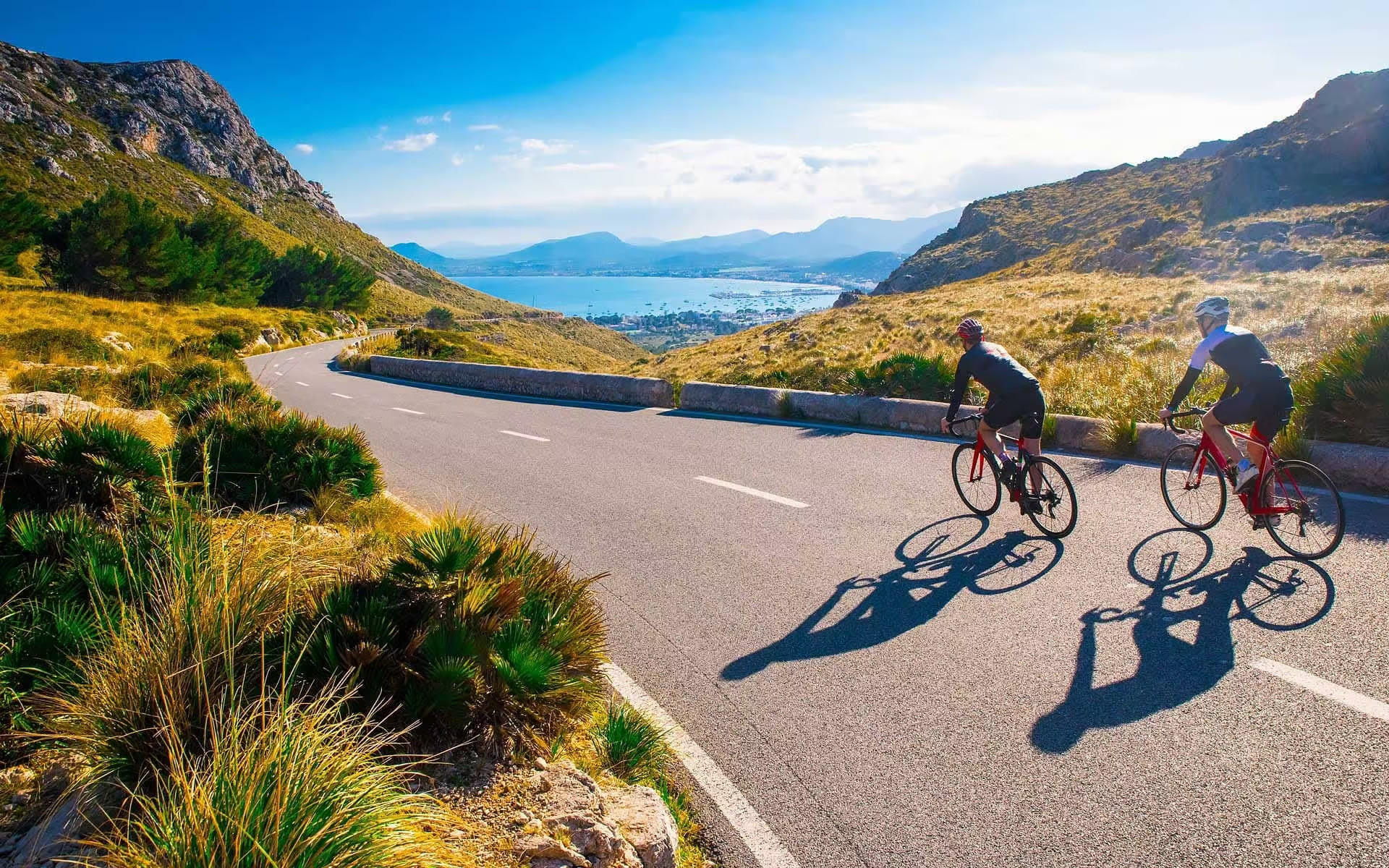
From the challenging climbs of the Serra de Tramuntana to the peaceful roads of Mallorca’s central plain, there is a route for almost every fitness level. In this guide, we explore some of the best road cycling routes in Mallorca, along with practical advice for planning your cycling holiday.
Mallorca is one of Europe’s most popular destinations for road cycling. Its combination of mountain passes, quiet country lanes, coastal roads and pleasant Mediterranean weather makes the island an excellent choice for both amateur riders and experienced cyclists.
Why choose Mallorca for road cycling?
Mallorca offers an extraordinary variety of landscapes within a relatively small area. During a single ride, you can pass through traditional villages, farmland, pine forests, mountain valleys and spectacular stretches of coastline.
The island’s road network is another major advantage. Many of Mallorca’s secondary roads are well maintained and relatively quiet, particularly outside the busiest summer months. There are also numerous cafés, bike rental shops and cyclist-friendly accommodation options throughout the island.
Mallorca is suitable for:
- Professional cyclists and cycling teams.
- Experienced riders looking for demanding climbs.
- Amateur cyclists planning an active holiday.
- Groups and cycling clubs.
- Visitors looking for relaxed countryside routes.
- Travellers bringing their own road bikes to the island.
1. Port de Pollença to Cap de Formentor
The road from Port de Pollença to Cap de Formentor is one of the most famous road cycling routes in Mallorca. It combines challenging climbs, exciting descents and some of the most impressive coastal scenery on the island.
The route begins in Port de Pollença and climbs towards the Es Colomer viewpoint. This first ascent provides spectacular views over the Formentor Peninsula and the Mediterranean Sea.
From Es Colomer, the road continues through a landscape of pine forests, cliffs and secluded coves. After passing Formentor Beach, cyclists face several additional climbs before reaching the lighthouse at Cap de Formentor.
The return journey follows the same road back to Port de Pollença.
Route details:
- Distance: Approximately 40 kilometres return.
- Difficulty: Medium to challenging.
- Terrain: Paved mountain and coastal roads.
- Starting point: Port de Pollença.
- Main highlights: Es Colomer viewpoint, Formentor Beach and Cap de Formentor lighthouse.
The road can become busy at certain times of the year, so starting early in the morning is highly recommended. Seasonal traffic restrictions may also apply on the Formentor Peninsula, so check the latest local information before your ride.
2. Port de Pollença to Lluc Monastery
This route takes cyclists from Mallorca’s northern coast into the heart of the Serra de Tramuntana. It is an excellent option for riders who want to experience a substantial mountain climb without completing one of the island’s longest routes.
After leaving Port de Pollença, the road passes close to the historic town of Pollença before heading towards the mountains. The main challenge is the ascent to Coll de Femenia, a beautiful climb surrounded by limestone peaks and Mediterranean vegetation.
Once over the mountain pass, the road continues towards Lluc Monastery, one of Mallorca’s most important cultural and spiritual landmarks. Lluc is also a popular meeting point for cyclists and a convenient place to stop for food or refreshments.
Cyclists can return to Port de Pollença along the same road or use Lluc as the starting point for a longer route through the Serra de Tramuntana.
Route details:
- Distance: Approximately 75–85 kilometres return.
- Difficulty: Medium to challenging.
- Terrain: Paved mountain roads.
- Starting point: Port de Pollença.
- Main highlights: Pollença, Coll de Femenia and Lluc Monastery.
3. Sóller, Deià and Valldemossa
The coastal road connecting Sóller, Deià and Valldemossa offers one of the most beautiful cycling experiences in Mallorca. It follows part of the Ma-10 through the Serra de Tramuntana, an area recognised by UNESCO for its cultural landscape.
Starting in Sóller, the route heads towards Deià through olive groves, mountain terraces and sections overlooking the Mediterranean. Deià is one of Mallorca’s most picturesque villages, known for its stone houses, artistic heritage and dramatic location between the mountains and the sea.
The route then continues towards Valldemossa, passing several viewpoints and demanding climbs. Valldemossa’s historic centre provides an excellent place to stop before continuing the route or arranging transport back to your accommodation.
Route details:
- Distance: Approximately 55–70 kilometres, depending on the itinerary.
- Difficulty: Challenging.
- Terrain: Paved mountain and coastal roads.
- Starting point: Sóller or Valldemossa.
- Main highlights: Sóller Valley, Deià, Valldemossa and Mediterranean viewpoints.
This route includes technical descents, narrow sections and considerable elevation gain. It is best suited to experienced and confident road cyclists.
4. Andratx to Banyalbufar
The road between Andratx and Banyalbufar is a spectacular option for cyclists who want to explore the western side of the Serra de Tramuntana.
The route follows a winding coastal road through a rugged landscape of forests, mountains and sea cliffs. Depending on the itinerary, riders can pass through Estellencs before reaching Banyalbufar, a beautiful village famous for its hillside terraces and views over the Mediterranean.
Although none of the individual climbs is as famous as Sa Calobra, the constant ascents and descents make this a physically demanding route. Riders should also be comfortable cycling on narrow mountain roads.
Route details:
- Distance: Approximately 50–65 kilometres return.
- Difficulty: Challenging.
- Terrain: Paved coastal and mountain roads.
- Starting point: Andratx.
- Main highlights: Estellencs, Banyalbufar, terraced hillsides and coastal views.
A cycle shuttle is particularly useful for this route because it allows riders to finish in Banyalbufar or continue towards Esporles and Valldemossa without having to return to Andratx.
5. Alcúdia, Petra and Sineu
Not every road cycling route in Mallorca involves demanding mountain passes. The island’s central plain, known as Es Pla, offers peaceful roads, rolling terrain and attractive traditional villages.
A circular route from Alcúdia can take cyclists through Muro, Santa Margalida, Petra and Sineu. The landscape consists of farmland, vineyards, almond trees, old windmills and traditional stone houses.
Petra is an especially popular stopping point for cyclists and has several cafés with terraces. Sineu is another worthwhile destination, with an attractive historic centre and a traditional weekly market.
The exact route can be adapted depending on your fitness level and available time.
Route details:
- Distance: Approximately 70–100 kilometres.
- Difficulty: Medium.
- Terrain: Paved country roads with gentle rolling sections.
- Starting point: Alcúdia or Port d’Alcúdia.
- Main highlights: Petra, Sineu, Muro and rural Mallorca.
This is a good option for riders who want to cover a substantial distance without the steep climbs found in the Serra de Tramuntana.
6. Palma, Esporles and Banyalbufar
This route allows cyclists staying in or near Palma to reach the Serra de Tramuntana without travelling to the north of the island.
After leaving Palma, the route heads towards Esporles, a traditional village surrounded by wooded hills. From there, cyclists continue climbing through the mountains before descending towards Banyalbufar.
Banyalbufar is an ideal place to rest and enjoy the views before returning to Palma. More experienced riders can extend the route towards Estellencs, Valldemossa or Andratx.
Route details:
- Distance: Approximately 65–85 kilometres return.
- Difficulty: Medium to challenging.
- Terrain: Paved country and mountain roads.
- Starting point: Palma.
- Main highlights: Esporles, Banyalbufar and the Serra de Tramuntana.
When leaving and returning to Palma, plan the route carefully to avoid busy roads wherever possible.
7. Puig de Randa from Algaida
Puig de Randa is an excellent road cycling climb in central Mallorca. While it is not as long as the climbs in the Serra de Tramuntana, its steady gradient and panoramic views make it a rewarding ride.
The route begins in Algaida and continues towards the village of Randa. From there, the road climbs past the Sanctuary of Gràcia and Sant Honorat before reaching the Sanctuary of Cura at the summit.
From the top, cyclists can enjoy extensive views across Mallorca, including the central plain, Palma Bay and the Serra de Tramuntana.
Route details:
- Distance: Approximately 30 kilometres return from Algaida.
- Difficulty: Medium.
- Terrain: Paved roads.
- Starting point: Algaida.
- Main highlights: Randa, the historic sanctuaries and panoramic views from Cura.
Puig de Randa can also be included in a longer route through villages such as Llucmajor, Montuïri, Porreres or Sineu.
What about Sa Calobra?
Sa Calobra is one of Mallorca’s most famous cycling climbs and deserves a place on almost every experienced cyclist’s wish list. However, it also appears in our guide to the essential cycling routes in Mallorca, where you can find more information about its distance, gradients and famous hairpin bends.
Rather than repeating the complete route here, we recommend combining Sa Calobra with a longer road cycling itinerary through Lluc and the Serra de Tramuntana.
Cyclists should remember that they must descend to Sa Calobra before climbing back out. Good physical preparation, suitable gearing and careful planning are essential.
When is the best time for road cycling in Mallorca?
The best seasons for cycling in Mallorca are generally spring and autumn.
From February to May, temperatures are pleasant and the island’s countryside is particularly beautiful. This is also one of the most popular periods for professional teams and cycling groups.
September, October and November offer warm conditions with fewer visitors than the main summer season.
Road cycling is possible during July and August, but high temperatures can make longer routes difficult. During the summer, start early in the morning, carry plenty of water and avoid the hottest hours of the day.
Winter can also provide excellent cycling conditions, although rain, wind and lower temperatures are more likely in the Serra de Tramuntana.
Essential tips for road cycling in Mallorca
Before beginning any cycling route in Mallorca, consider the following recommendations:
- Check your brakes, tyres and gears before every ride.
- Wear a helmet and visible cycling clothing.
- Carry enough water and energy food.
- Use sun protection throughout the year.
- Download your route or carry an offline map.
- Check the weather forecast, especially for mountain routes.
- Bring basic tools, spare inner tubes or a repair kit.
- Use lights when visibility is poor.
- Take extra care on narrow roads and technical descents.
- Respect traffic regulations and other road users.
- Avoid the hottest part of the day during summer.
- Carry a charged mobile phone and emergency contact information.
The distances in this guide are approximate and may vary according to the precise starting point, chosen roads and possible diversions.
Transporting your road bike around Mallorca
Planning a cycling holiday involves more than choosing the right routes. You also need to consider how you will transport your bicycle from Palma de Mallorca Airport to your accommodation and how you will reach routes in other parts of the island.
A standard taxi or small rental car may not have enough room for passengers, luggage, assembled bicycles and bike boxes. Transport can become even more complicated when travelling with a cycling club or group.
A specialised cycle shuttle in Mallorca provides a comfortable and practical solution. Cyclists and their equipment can be transported in suitable vehicles without having to dismantle and reassemble their bicycles for every journey.
Cycle shuttle services can be used for:
- Transfers from Palma de Mallorca Airport.
- Transport to hotels and cycling accommodation.
- Collection from the end of a one-way route.
- Transfers to the Serra de Tramuntana.
- Transport for cycling clubs and training groups.
- Bicycles travelling in protective bike boxes.
- Transfers to areas such as Alcúdia, Pollença, Sóller, Andratx or Lluc.
Discover Mallorca with a cycle shuttle service
Some of Mallorca’s best road cycling routes do not need to finish where they started. With a cycle shuttle service in Mallorca, you can be taken to the beginning of your chosen route and collected from a different destination at the end of the ride.
This gives you more freedom to explore the island, create one-way itineraries and save your energy for the most enjoyable sections of the route.
Mr John Transfer provides transport for cyclists, bicycles and luggage across Mallorca, including airport transfers and journeys to popular cycling areas. Book your cycle shuttle in advance and enjoy Mallorca’s roads without worrying about how to reach the starting point or return to your accommodation.